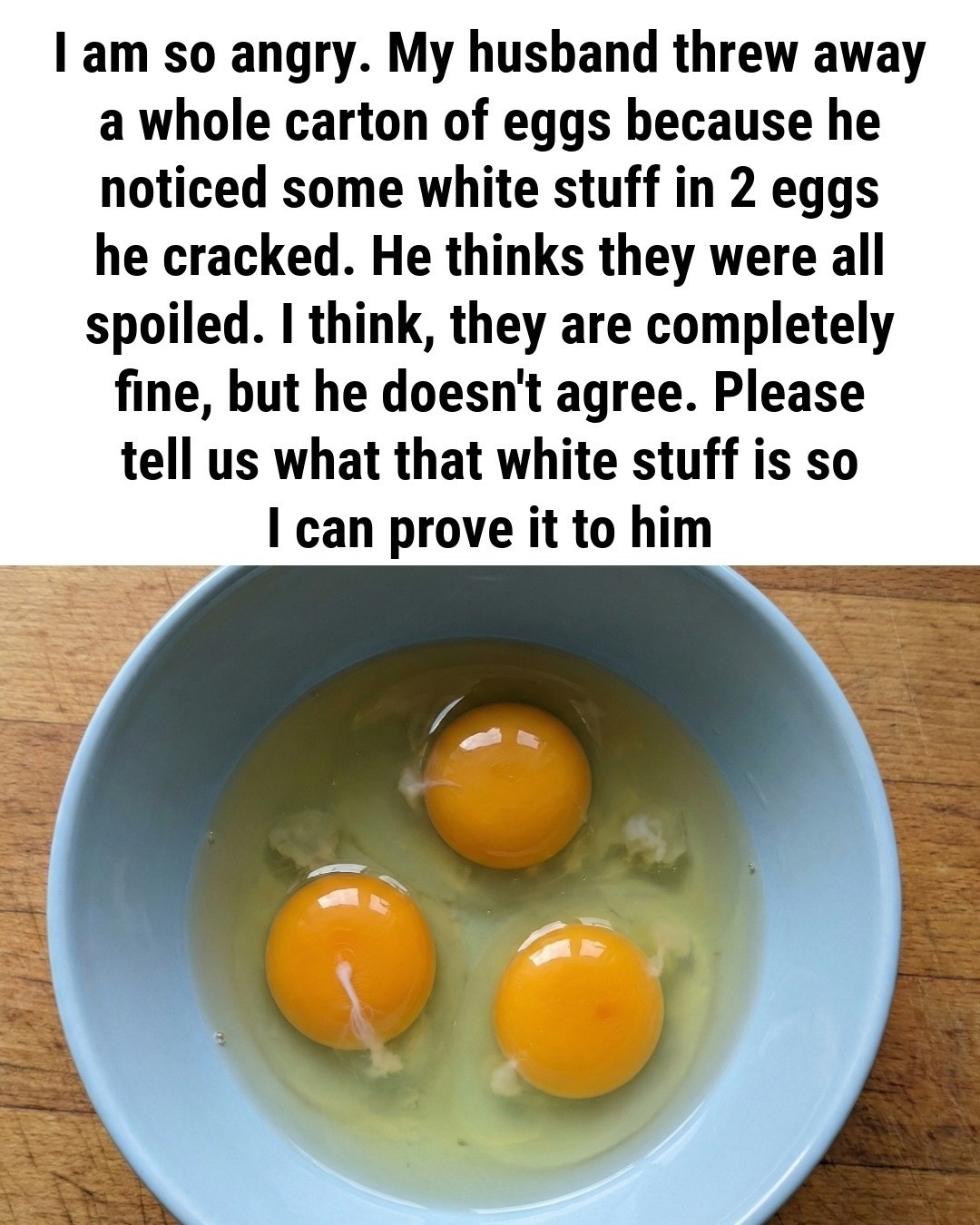
You crack open an egg—and there it is: that weird, white, stringy blob clinging to the yolk.
For years, you might’ve thought it was a flaw, a leftover bit of… something best discarded. Maybe you even scooped it out like it was a mistake nature made.
But here’s the truth: that “white stuff” is not only normal—it’s a sign of freshness! And it has a name that sounds like it belongs in a Mediterranean bistro: the chalaza (pronounced shuh-LAY-zuh).
What Exactly Is the Chalaza?
The chalaza (from the Greek word for “little knot”) is not an embryo, not a blood spot, and definitely not a parasite.
It’s a natural, edible part of the egg—made of twisted protein strands—and its job is simple but vital:
To keep the yolk centered in the egg white.
Think of it as nature’s suspension system. Without the chalaza, the yolk would drift and bump against the shell, risking damage—especially important if the egg were ever fertilized and developing into a chick.
Why Are There Two?
Most eggs actually have two chalazae—one at each end of the yolk—anchoring it like a hammock inside the egg white (albumen). When you crack an egg, you usually see one more prominently than the other.
