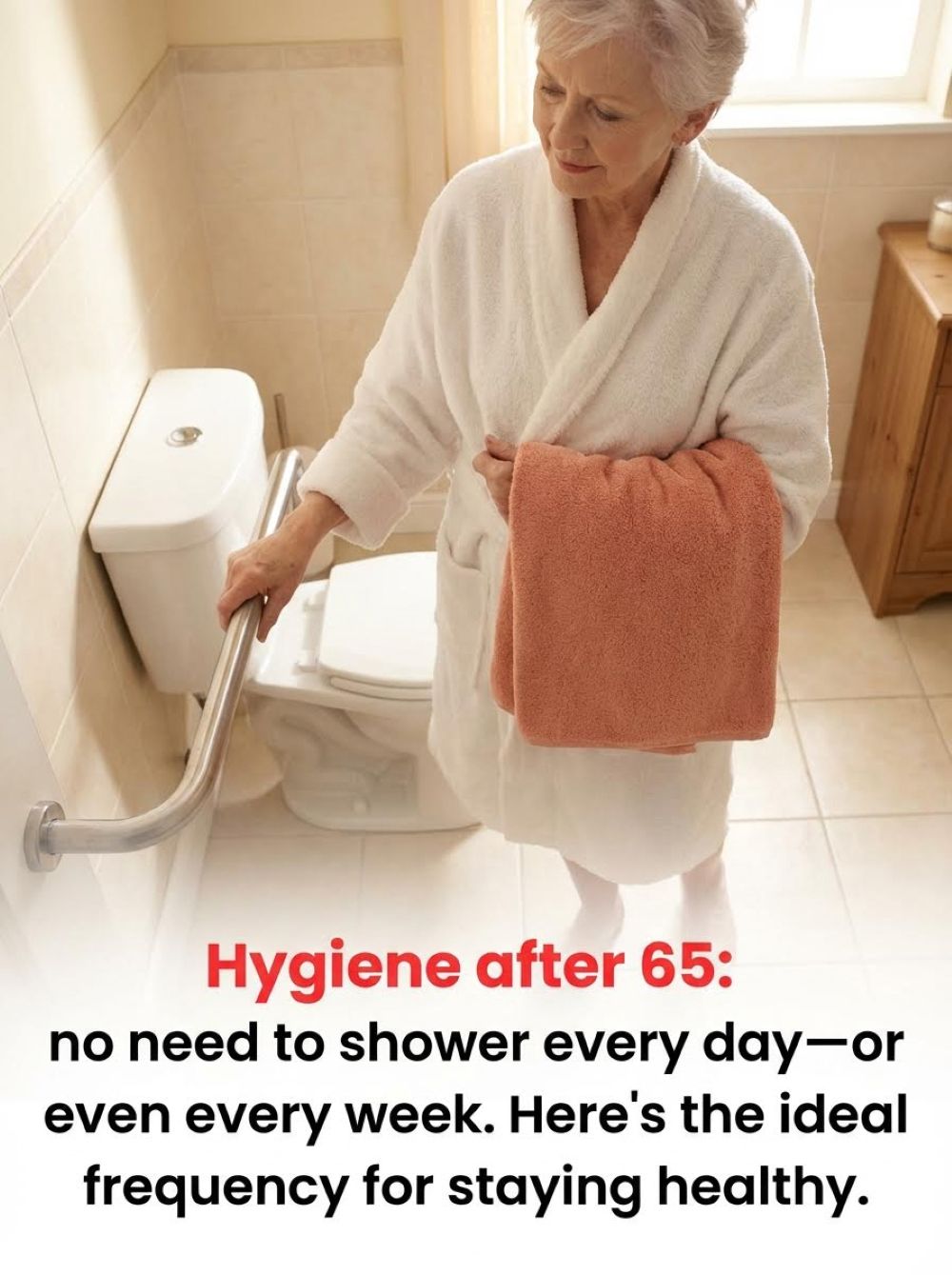
For decades, daily showers have been treated as a gold standard of personal hygiene. But as we age—especially after 65—this habit may be less beneficial than we think. In fact, many dermatologists and geriatric specialists agree: showering every day, or even every week, isn’t always necessary for older adults, and in some cases, it can do more harm than good.
So what’s the ideal frequency for staying clean and healthy after 65? The answer depends on skin health, activity level, and overall wellbeing—but it’s likely less often than you expect.
Why Skin Changes After 65
As we age, our skin undergoes significant changes:
Thinner skin – The outer layer becomes more fragile and prone to irritation
Reduced oil production – Natural oils that protect and moisturize the skin decrease
Slower cell turnover – Skin repairs itself more slowly
Increased dryness and itching – Especially in winter or dry climates
Daily hot showers strip away what little natural oil remains, leaving older skin vulnerable to dryness, cracking, and infection.
The Problem With Daily Showering
While daily showers may feel refreshing, they can create hidden issues for seniors:
Excessive dryness and itching
Worsening eczema or psoriasis
Higher risk of skin tears
Increased sensitivity to soaps and fragrances
Disrupted skin microbiome (the “good bacteria” that protect your skin)
Ironically, over-washing can make skin less healthy over time.
