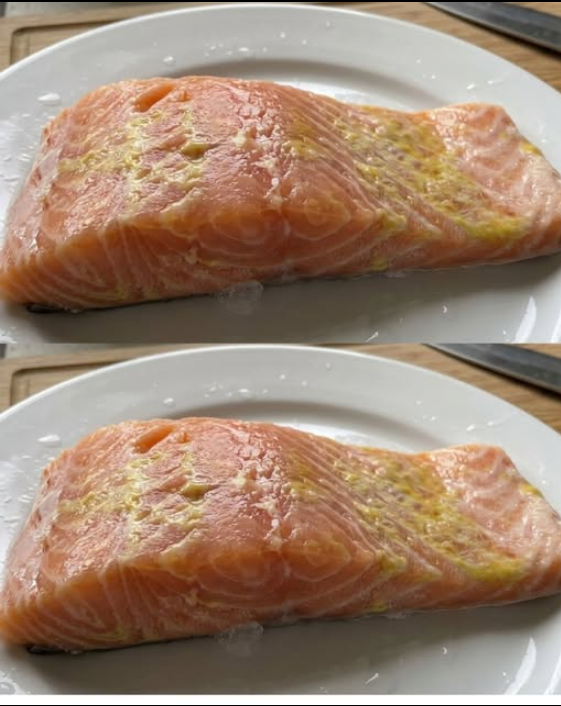
You pull a salmon fillet from the freezer, thaw it overnight, and—surprise—a yellowish or orange-yellow tint appears on the flesh. No foul smell, no slimy texture… just an unexpected hue that makes you pause before cooking.
Good news: this is almost always harmless—and likely due to one of two natural causes. Let’s break down what’s happening and when you can safely cook your salmon (and when you should toss it).
✅ Most Likely Cause #1: Oxidation of Healthy Fats
Salmon is rich in omega-3 fatty acids (like EPA and DHA)—the very fats that make it so heart-healthy. When frozen and thawed, these fats can oxidize slightly at the surface, especially if exposed to air during storage.
This oxidation creates a light yellow or amber discoloration, often along the edges or in thinner parts of the fillet. It’s not spoilage—just a natural chemical reaction.
📌 Key signs it’s safe:
No strong “fishy,” sour, or ammonia-like odor
Firm texture (not mushy or slimy)
Discoloration is only on the surface
✅ What to do: Simply trim off the yellowed layer (if it bothers you) or cook as usual—the rest of the fillet is perfectly fine.
✅ Most Likely Cause #2: Natural Pigment Variation:✅ Most Likely Cause #2: Natural Pigment Variation