A Micro-History Stitched into Fabric
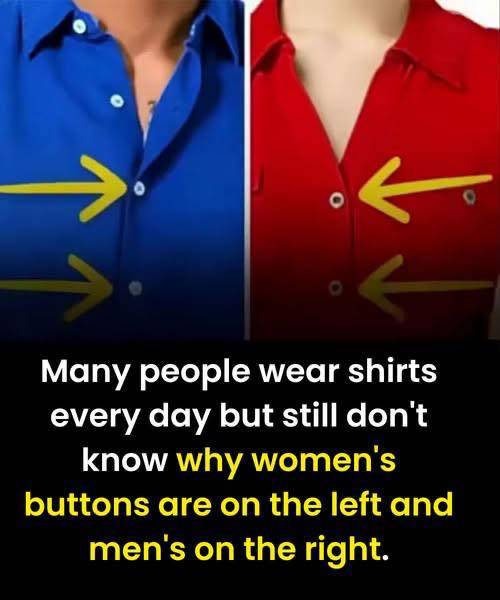
Most individuals don a shirt or blouse in the morning with hardly a second thought regarding the mechanics of its closure. Yet, that seemingly trivial detail—the side upon which the buttons and buttonholes fall—is far from random. It is, in fact, the repository of a deep, surprisingly meaningful history. The prevailing standard dictates that women’s shirts typically close left panel over right, while men’s garments are universally designed to close right panel over left. This simple, everyday difference is a cultural fossil, reaching back hundreds of years to reflect social customs, rigid class distinctions, and practical necessities that once profoundly shaped the routines of daily life.
For those who have lived through many decades and observed the sweeping, often cyclical evolution of fashion, understanding the social and military roots of this design can feel like uncovering a small but richly detailed piece of global cultural history—a history that remains silently stitched into every garment we wear.
The Privilege of the Left: Women and the Ritual of Dressing
The enduring tradition of women’s shirts and blouses buttoning on the left side began to solidify during the 18th and 19th centuries, an era defined by highly elaborate, structured, and meticulously layered clothing. During this time, a woman’s wardrobe served as an unmistakable signal of her social standing.
Convenience for the Helper
Crucially, women of the gentry and higher social standing rarely, if ever, dressed themselves. Their elaborate garments—which included complex bustles, corsets, multiple underskirts, and gowns fastened by dozens of tiny hooks, lacings, and even smaller buttons—necessitated assistance. They relied entirely upon a lady’s maid or staff to manage the intricate, time-consuming process.
