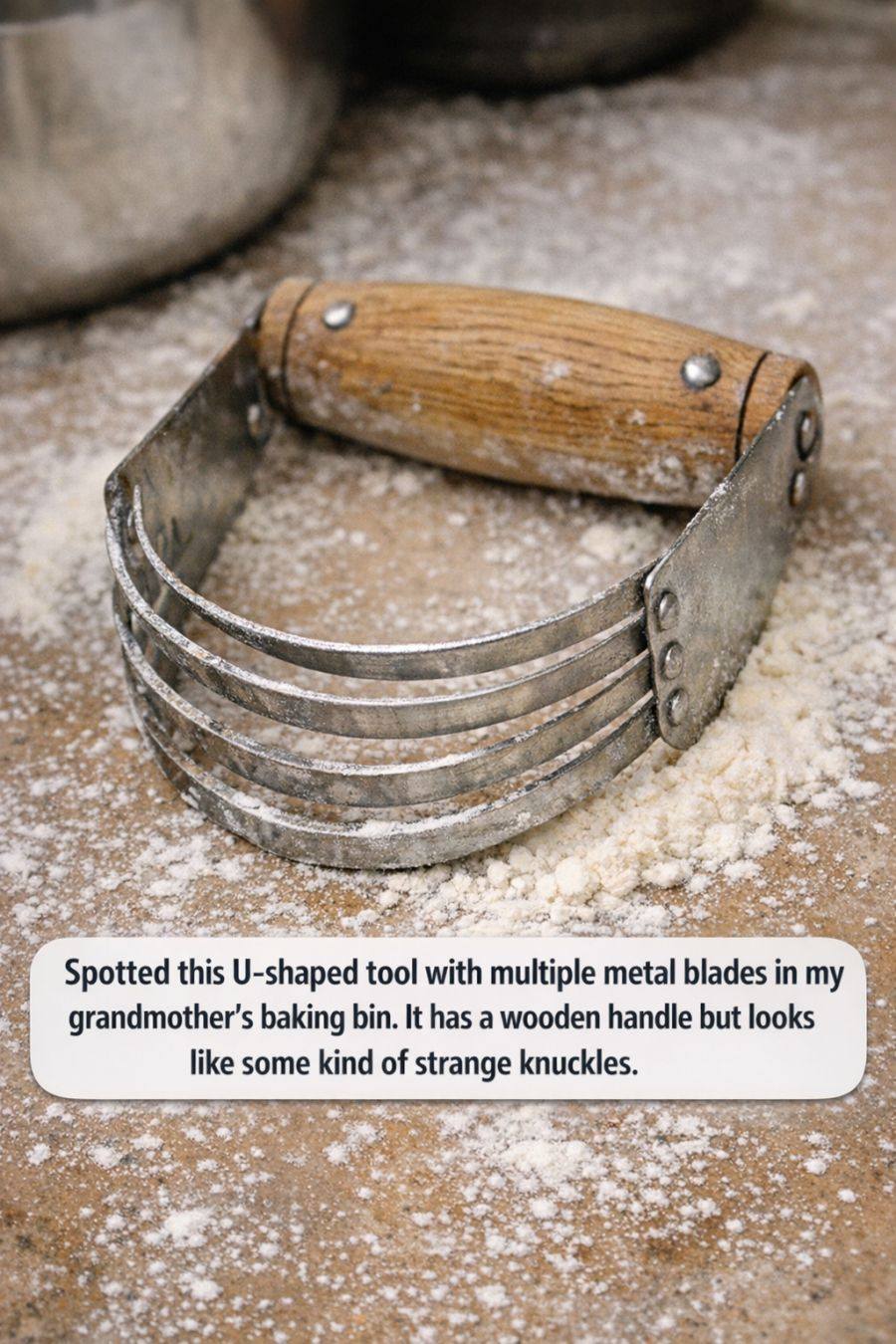
This method helps to inhibit gluten formation, which occurs when flour and liquid are mixed. By limiting gluten development, the pastry remains tender and crumbly rather than tough. The pastry blender’s design allows for quick and uniform cutting, ensuring that the fat does not melt from the warmth of your hands.
4. Why The Handle Is Wood And The Blades Are Metal
The choice of materials in a pastry blender is both practical and traditional. Wood is a preferred material for the handle due to its durability and comfort. It is less likely to cause fatigue during use, as it doesn’t conduct heat or cold, making it pleasant to hold for extended periods.
The metal blades, typically made of stainless steel, are chosen for their strength and resistance to rust. Stainless steel maintains a sharp edge, even though the blades aren’t sharpened like a knife. This ensures the tool can consistently cut through cold, hard butter without bending or breaking.
5. Pastry Blender vs. Knuckle Duster: Clearing Up The Confusion
At a glance, the pastry blender’s shape bears a resemblance to a knuckle duster, a hand-held weapon designed for close combat. However, their purposes, materials, and construction are vastly different.
A knuckle duster is designed to protect the user’s hand while delivering forceful blows. Conversely, a pastry blender is designed for gentle, consistent pressure to mix ingredients. The blades of a pastry blender are dull and intended to interact with food, whereas knuckle dusters have no such culinary application.