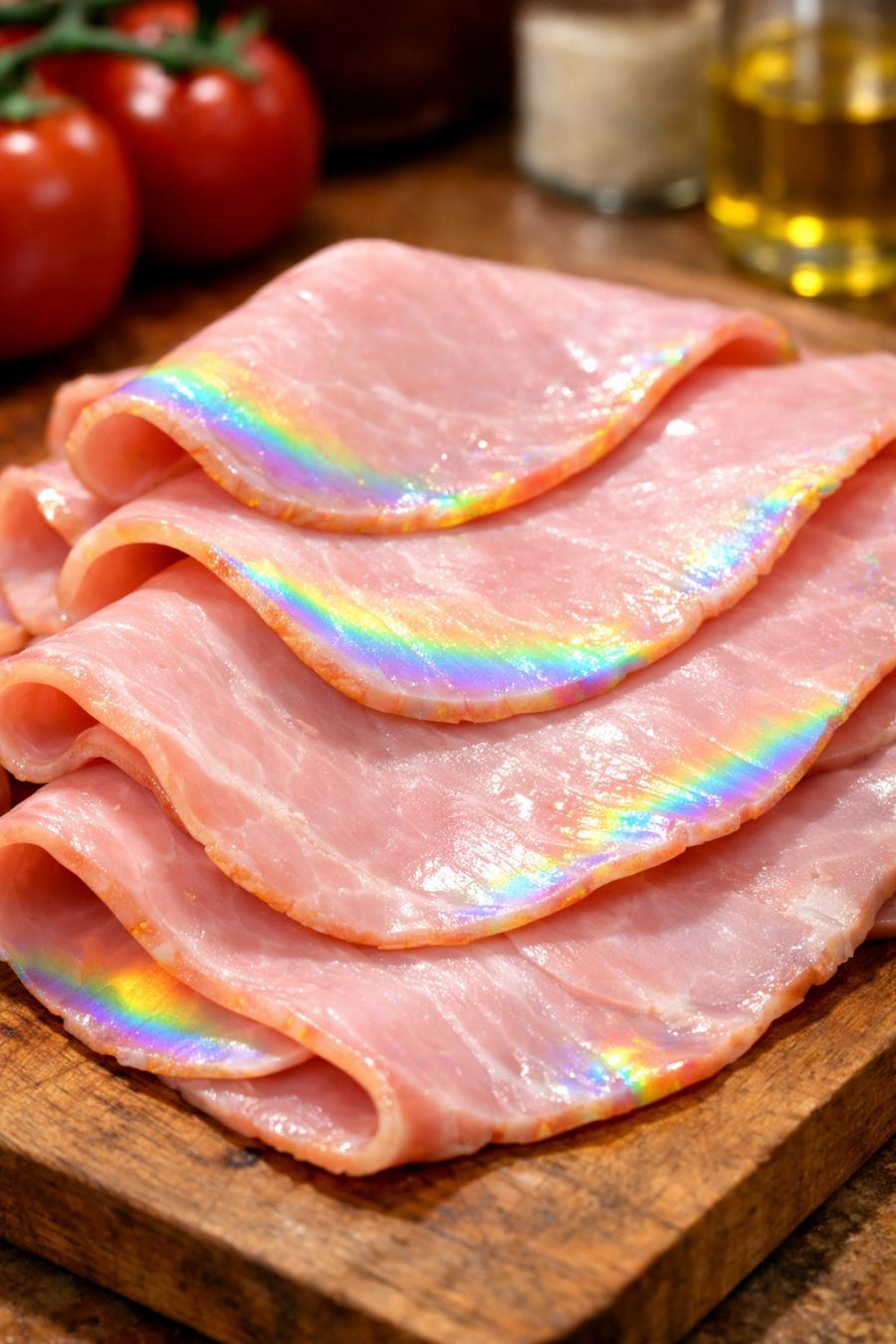
Have you ever pulled a slice of deli ham from the fridge only to notice a peculiar rainbow-like sheen glistening on the surface? This iridescent quality can be both mesmerizing and concerning, especially if you’re unsure about the freshness of your meat. The appearance of this colorful shine might make you question whether it’s safe to consume.
In this article, we’ll delve into the science behind this phenomenon, explaining what causes the iridescent effect on ham and when it is considered normal. We’ll also provide guidance on how to tell if your deli ham is still good to eat and offer expert tips on buying and storing your deli meats to prevent spoilage.
Advertisement
1. What That Rainbow Shine on Deli Ham Actually Is
The rainbow-like shine seen on deli ham is known as iridescence. This occurs when the surface structure of the meat reflects light at different angles, creating a spectrum of colors. This effect is similar to the rainbow you see on a soap bubble or the surface of a DVD. The precise arrangement of muscle fibers and fat, along with the angle of light, contributes to this colorful display.
It’s important to note that this iridescence is not an indicator of spoilage. Instead, it is a natural occurrence that results from the meat’s structure and how it interacts with light. In fact, this phenomenon is often observed in various other types of sliced meats, such as roast beef and turkey.
2. The Science Behind Iridescent Meat Surfaces
The iridescent effect on meat surfaces is primarily due to the diffraction of light. When light hits the surface of the meat, it is scattered by the muscle fibers, which act like tiny prisms. This scattering causes the light to split into its component colors, much like a prism separates white light into a rainbow.
Additionally, the cut of the meat plays a significant role in this process. When meat is sliced very thinly, the uniformity and alignment of the muscle fibers enhance the light diffraction, making the iridescent effect more pronounced. This is why thinner slices of deli meats are more likely to exhibit this colorful sheen.
