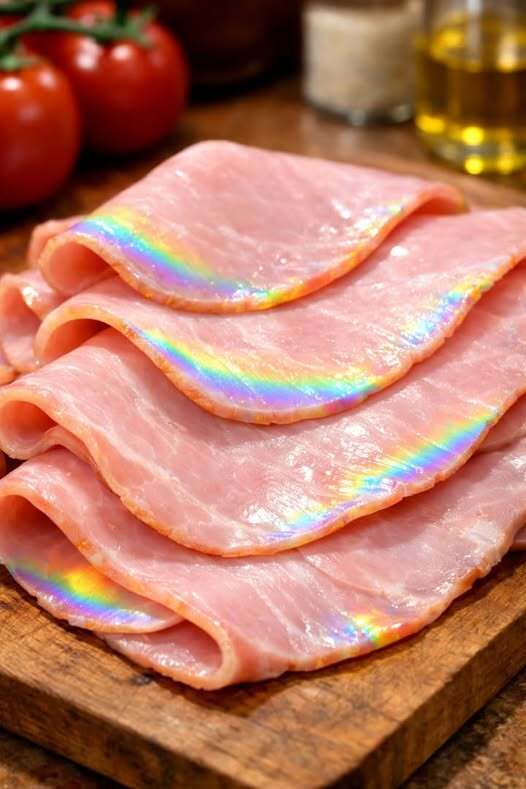
In most cases, the rainbow effect is completely harmless. It happens when light hits thinly sliced meat at certain angles, reflecting off tightly packed muscle fibers and separating into different wavelengths. Moisture on the surface and common curing processes can make the effect more noticeable, much like the colors seen on soap bubbles or a thin layer of oil.Next, focus on the signs that actually matter. Fresh deli ham should feel firm and slightly moist, not sticky or slippery. Color should look even and natural rather than dull, grayish, or blotchy. Smell is especially important—any sour, sharp, or unpleasant odor is a strong signal that the meat should not be eaten, regardless of how it looks.Finally, consider storage and timing. Once opened, deli ham should be sealed tightly, kept cold, and used within a few days for best quality. Refrigeration slows changes but doesn’t stop them entirely. By checking texture, smell, storage conditions, and how long the package has been open, you can confidently decide whether deli ham is still suitable to enjoy—without letting a harmless shimmer cause unnecessary worry.