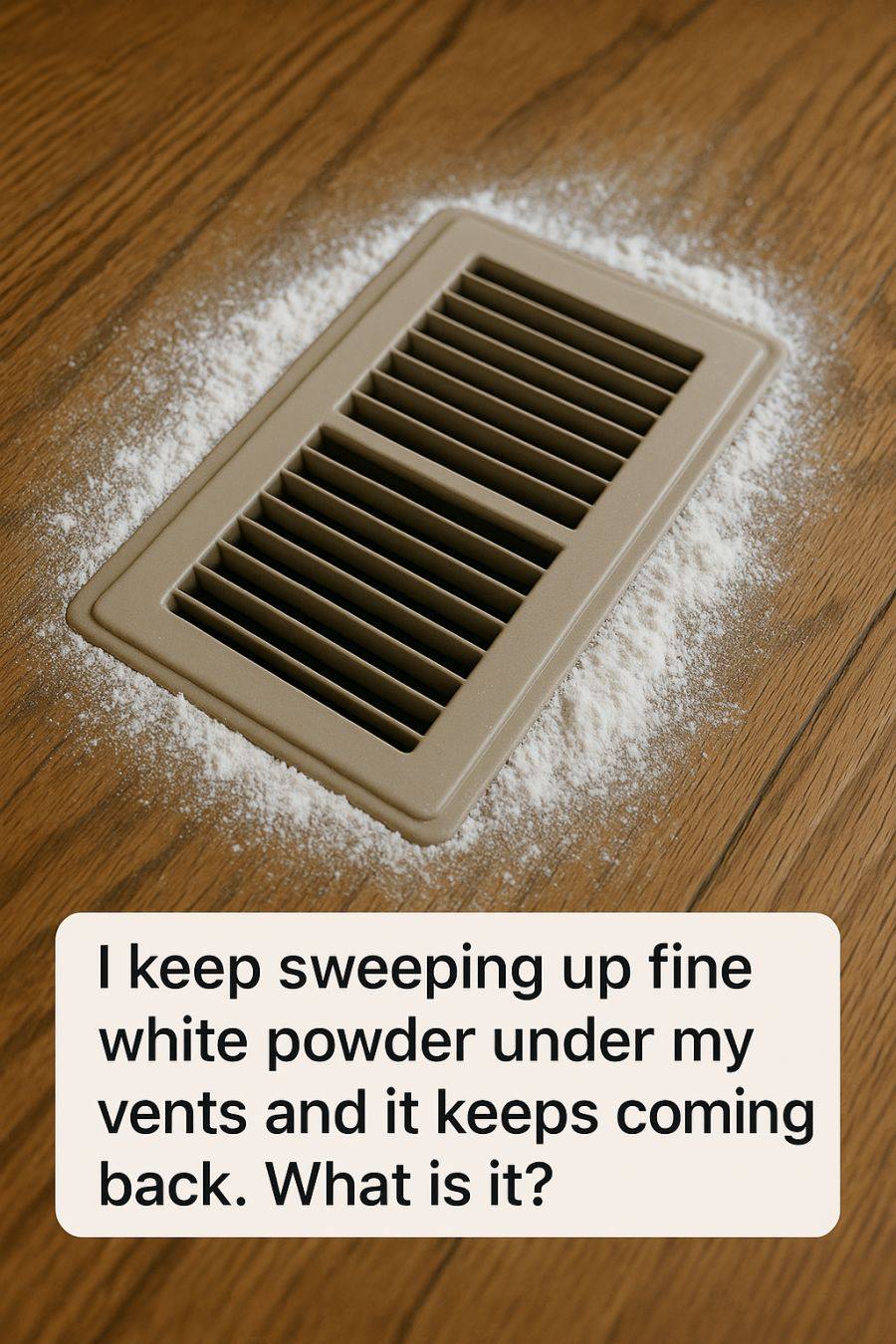
In HVAC systems over 15 years old, this deterioration is more likely to occur, especially if maintenance has been neglected. When the duct liner starts crumbling, it can create a consistent stream of fine dust that is distributed throughout the home by the HVAC system. This not only creates a mess but can also reduce indoor air quality, potentially leading to respiratory issues for occupants.
3. How to Tell If the Powder Is From Crumbling Duct Insulation
Determining if the fine white powder is coming from crumbling duct insulation involves a few investigative steps. First, visually inspect the vents and surrounding areas for signs of fiberglass or other insulation debris. Using a flashlight, look for small, shard-like particles that may resemble the texture of the duct liner material.
If you have access to the ductwork, examine the interior for signs of wear or damage. This can include visible cracks, loose material, or areas where the liner appears frayed. Conducting a simple wipe test by running a damp cloth along the duct surface can also reveal the presence of deteriorating insulation if the cloth picks up a significant amount of fine, white particles.
4. Could It Be Drywall Dust or Construction Debris in the Ducts?
Another potential source of fine white dust is leftover drywall dust or construction debris. This is particularly common in homes that have recently undergone remodeling or construction work. During such projects, dust and debris can easily enter the duct system and be distributed throughout the house.
To determine if this is the cause, consider the timing of the dust appearance relative to any recent construction activities. Additionally, inspecting the ducts near areas where work was performed can reveal accumulated debris. In some cases, a professional duct cleaning can effectively remove this type of dust, restoring normal air quality and reducing visible powder around vents.