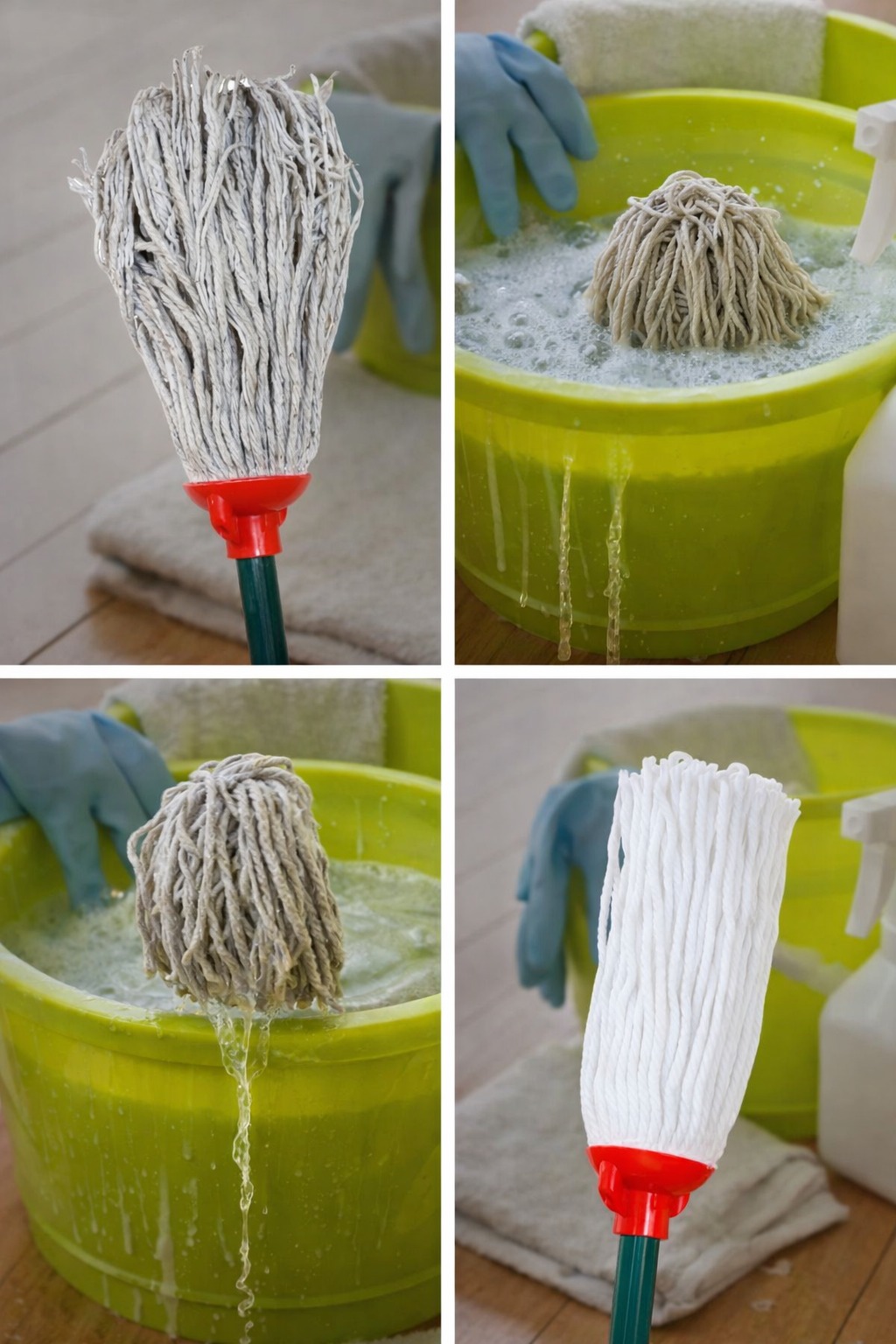
However, if the mop has plastic components attached, use a lower temperature wash or a gentle handwash cycle. Excessive heat might deform the plastic or cause it to crack over time.
Avoid using fabric softener—it can coat the fibers and reduce their absorbency. The goal is to make the mop as clean and fresh as possible, not to make it soft or perfumed.
Step 3: The Critical Drying Process
You might think that once washed, your job is done—but the drying stage is the most important step of all. A mop that dries slowly or unevenly can easily develop mold and bacteria, which thrive in damp environments. That musty smell that sometimes comes from cleaning tools? It’s usually a sign of improper drying.
After washing, take a few moments to untangle and separate the mop strands. This helps air circulate more freely between the fibers, ensuring that it dries completely.
If the weather is warm and sunny, hang the mop outside in direct sunlight. Sunlight is a natural disinfectant—it kills bacteria and helps remove any remaining odor. The heat and airflow will also ensure a quick and thorough dry.
During the colder months, when drying outdoors isn’t an option, place the mop near a heat source like a radiator, a stove, or a dehumidifier. Avoid leaving it crumpled or stored in a closed container while damp, as this can cause mold growth within hours.
