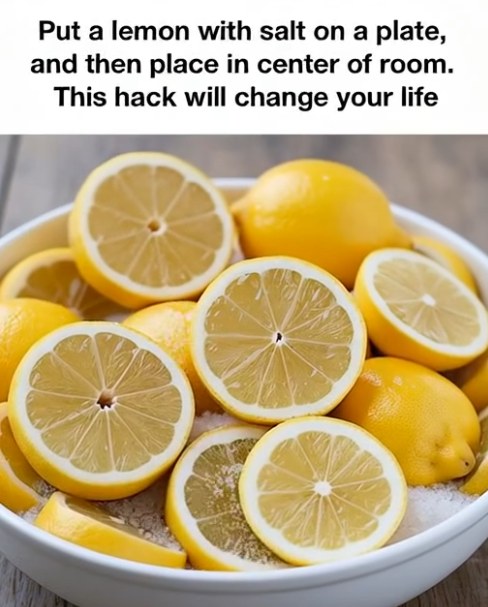
For years, home-remedy blogs and social media posts have touted a simple “trick” – cut a fresh lemon into quarters, sprinkle it with salt, and set the slices on a plate in the center of a room – as a cure-all for bad smells, stress, “negative energy,” and even germs. Proponents claim this ritual freshens the air, boosts mood, repels insects, and cleanses the space spiritually. But what is the reality behind these claims? In this article we examine the scientific evidence and traditional beliefs about putting lemon and salt in a room, and explain the best way (if any) to try it safely. We also cite credible expert opinions that support or debunk the practice.
Scientific and Practical Effects of Lemon & Salt
Aroma and odor masking. Lemon peel contains natural oils (chiefly d-limonene) that give off a fresh citrus scent. This pleasant fragrance can mask bad odors by over-powering them with lemon’s aroma. In practice, placing cut lemon or lemon slices in a room will make the air smell fresh simply because of the smell of lemon. It is not removing the odors chemically (like a purifier would), but your nose focuses on the lemon scent. Similarly, lemon’s citric acid and essential oils have mild antibacterial and antiseptic properties when applied directly. For example, a lemon-juice solution is sometimes used as a natural kitchen cleaner. One cleaning expert notes that citric acid makes lemon juice an effective antibacterial and bleaching agent on surfaces. However, in open air the effect is very weak – the lemon is not actively sanitizing the air. There is no scientific evidence that simply leaving a lemon slice in a room will kill germs in the air or on surfaces.
Air purification and ions. Some advocates claim salt or lemon will “absorb negative ions” or trap pollutants, improving air quality. In reality, mainstream science finds no evidence for this. In fact, experts debunk similar claims about salt lamps or salt bowls. A Cleveland Clinic wellness article reports: “There’s not a lot of evidence to support the idea that Himalayan salt lamps [or, by extension, bowls of salt] provide any of the supposed health benefits”. Likewise, Healthline notes there is currently no evidence that salt devices (lamps, bowls, etc.) can remove pathogens or purify indoor air. In short, the “air purifier” story is unsupported: an actual air purifier or ventilation is needed to clean indoor air. Salt will not magically pull bacteria or toxins out of the air. At best, a dry pile of salt might absorb a tiny amount of moisture in a very humid room, but that effect is negligible in normal home conditions.
Antibacterial compounds. Lemon’s value scientifically comes from its compounds like citric acid and limonene. Research shows lemon oil and citric acid can kill certain microbes in lab tests. For instance, one medical review notes that d-limonene (the main component of lemon peel oil) has antibacterial, antifungal, and antiviral properties. In practical terms, lemon juice can help clean a kitchen countertop. But again, a sliced lemon sitting out is not the same as using diluted lemon juice to scrub a surface. The vapor or juice concentration is far lower than what was used in studies. So while lemon juice is used as a natural cleaner (thanks to citric acid and its acidity), simply leaving lemon slices around will not achieve the same sanitizing effect.
Insect-repellent effects. The compound limonene also has insect-repelling properties. In laboratory and practical applications, limonene is used as a natural insect repellent and pesticide. Some studies on citrus oils (like orange or citronella oils) show they can deter mosquitoes. For example, one horticultural study found that certain citrus peel oils can provide short-term mosquito repellency. However, lemon specifically tends to be less effective than other citrus varieties in these studies. In fact, researchers found lemon peel oil was the least effective at repelling Aedes mosquitoes compared to other citrus oils. In everyday practice, having a lemon slice on a plate will release only a very small amount of aroma, which is unlikely to keep pests out. It may help a little against fruit flies (which dislike citrus), but overall this trick is not a reliable insect repellent. For real pest control, experts recommend purpose-made traps or repellents.
Summary: Scientifically, lemons and salt contain compounds that can clean or freshen in certain ways (citric acid can bleach and kill bacteria on contact; limonene can repel or kill some insects). Lemon aroma also can mask odors and might uplift mood (see next section). But there is no evidence that an unworked lemon-and-salt setup acts as an air purifier or germ-killer in a room. Health experts emphasize that proven methods (good ventilation, HEPA air filters, cleaning) are required to actually improve air quality. As one doctor puts it, salt lamps (and by analogy salt bowls) are popular for their glow or serenity, but their supposed health benefits “aren’t supported by science”.
