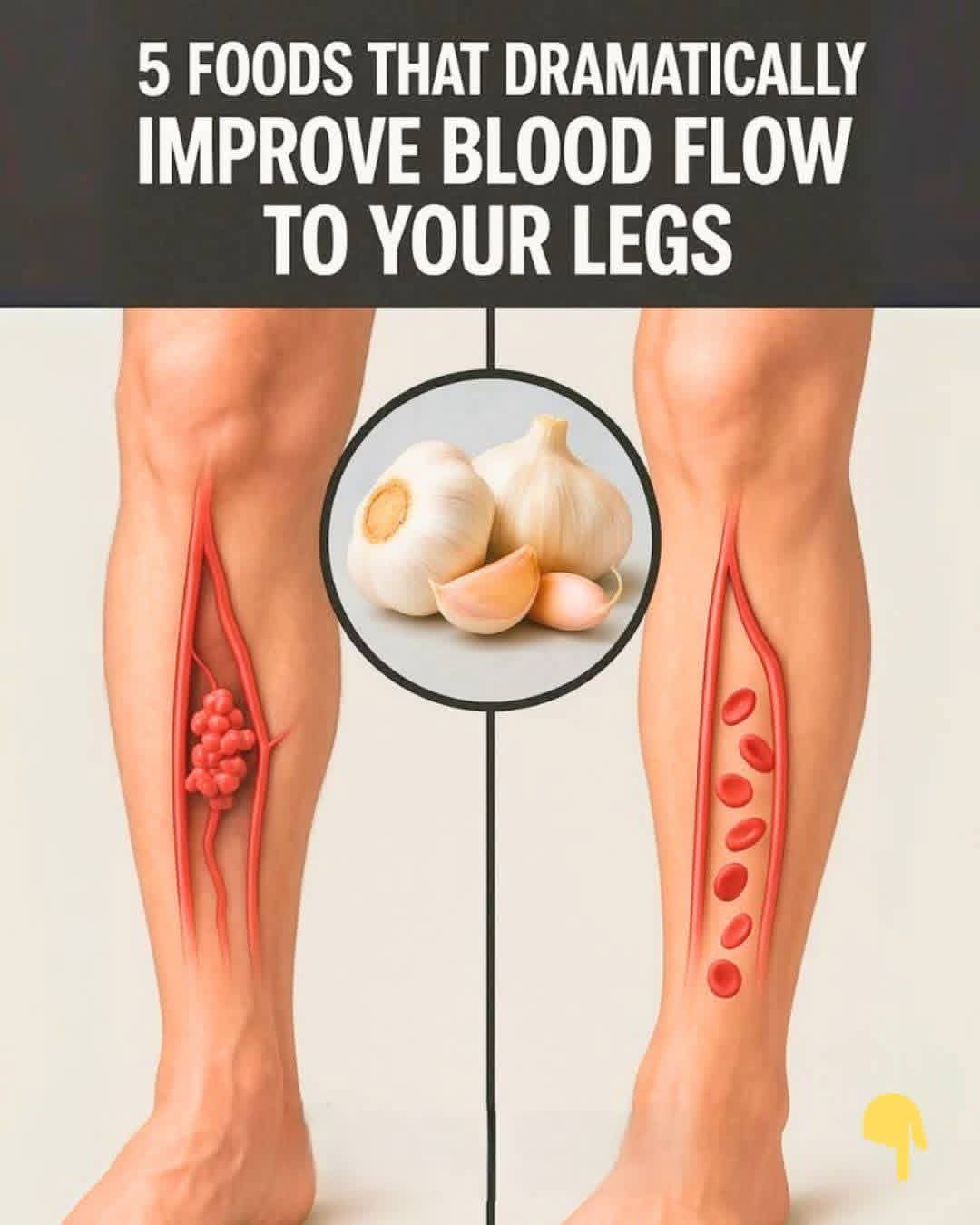
Poor circulation in the legs can lead to discomfort like cold feet, swelling, cramping, and fatigue. Fortunately, certain foods can significantly improve blood flow by supporting blood vessel health, reducing inflammation, and preventing plaque buildup.
1. Watermelon
How it helps: Watermelon is rich in an amino acid called L-citrulline. Your body converts L-citrulline into L-arginine, which is a precursor to nitric oxide.
The Nitric Oxide Effect: Nitric oxide is a powerful vasodilator, meaning it relaxes and widens your blood vessels. This allows blood to flow more freely, reducing blood pressure and improving circulation to the extremities like your legs.
How to enjoy it: Enjoy fresh chunks, blend it into a smoothie, or make a refreshing watermelon and feta salad.
2. Beets & Beetroot Juice
How it helps: Beets are circulation superstars for the same reason as watermelon: they boost nitric oxide. Beets are naturally high in dietary nitrates, which your body also converts into nitric oxide.
The Benefit: Studies consistently show that drinking beetroot juice can lower blood pressure and significantly improve blood flow, especially during exercise. This means more oxygen and nutrients are delivered to your leg muscles.
How to enjoy it: Drink a small glass of beetroot juice, roast beets as a side dish, or add them raw to salads.
3. Fatty Fish (Salmon, Mackerel, Sardines)
How it helps: Fatty fish are packed with Omega-3 fatty acids (EPA and DHA).
The Omega-3 Effect: Omega-3s are powerful anti-inflammatories. They reduce chronic inflammation in the arteries, help prevent the formation of blood clots, and can also stimulate the release of nitric oxide. This combination keeps arteries clear and flexible, promoting strong blood flow to the legs.
How to enjoy it: Aim for 2-3 servings per week. Bake, grill, or pan-sear your fish.
4. Dark Leafy Greens (Spinach, Kale, Arugula)
How it helps: These greens are excellent sources of nitrates (like beets) and magnesium.
The Combined Effect: The nitrates boost nitric oxide for vasodilation. Magnesium helps blood vessels relax, which is essential for healthy blood pressure and circulation. Furthermore, the high folate content in leafy greens helps reduce homocysteine, an amino acid that can damage blood vessel linings.
How to enjoy it: Use them as a base for salads, blend into green smoothies, or sauté them with garlic as a simple side.
5. Citrus Fruits (Oranges, Grapefruit, Lemons)
How it helps: Citrus fruits are famous for their high Vitamin C and flavonoid content.
The Vessel Protector: Vitamin C is crucial for producing collagen, a key component of blood vessel structure, keeping them strong and flexible. Flavonoids are antioxidants that protect the delicate lining of blood vessels (the endothelium) from oxidative damage and inflammation, ensuring they function properly.
How to enjoy it: Eat the whole fruit for fiber, or drink a glass of fresh-squeezed juice (be mindful of sugar).
Bonus: Two Powerful Supporting Players
Cayenne Pepper: The capsaicin in cayenne gives it its heat and acts as a vasodilator, stimulating blood flow immediately after consumption.
Garlic: The allicin in garlic has been shown to boost nitric oxide production and has blood-thinning properties, which can help prevent clots and improve circulation.
Important Considerations for Leg Circulation:
While diet is powerful, it’s only one piece of the puzzle. For dramatic improvement, also consider:
Stay Hydrated: Blood is about 50% water. Dehydration makes blood thicker and harder to pump.
Move Regularly: The “muscle pump” in your calves is essential for pushing blood back up to your heart. Avoid sitting or standing for long periods.
Manage Underlying Conditions: Conditions like diabetes, high blood pressure, and high cholesterol severely impact circulation. Work with your doctor to manage these.
Disclaimer: This information is for educational purposes only and is not a substitute for professional medical advice. If you have persistent circulation problems, please consult with a healthcare provider for an accurate diagnosis and treatment plan.
